
Eavesdropping on the breeze
How I fell back in love with my language

The soft lick of your mother-tongue. Mostly sweet, sometimes salty. Rarely sour. The layered lacquer of affection over the vowels of the village where you were born. You could recognise them in any market-place crowd. The almost imperceptible rise and fall of pitch that signals humour, irony, hesitancy. The shibboleths of phrasing that turn and flick like the hips of your first linguistic love, all those years ago, in a poem by a poet long since fallen from fashion. When you have travelled far on the dusty road, it is the language of home which you long for to slake your thirst. Unless. Unless the tones and idioms you yearn for have been forced into the service of a gang of crooks and villains. Have been brutalised into a dumb pastiche of cliché for the lubrication of power and money. How profound is your exile then? How desolate the soundscape?
***
As we grow older, so many aspects of the tick-tock mechanism of our lives require attention. The glorious oiled unison of youth, all the moving parts in harmony – those alliances can no longer be taken for granted. Cannot be left to take care of themselves. From our bodies to entire civilisations, the old certainties we grew up with - they all grow worn and creaky. We are of an age now when attention is required, when maintenance is due.
There are plenty of instruction manuals, of course. When and what to eat. How and how fast to move, how heavy to lift. Sleeping even. A skill we mastered as small children has become elusive, has to be tended and seduced. The list is long. And I am sorry, but I have to add to it.
Our speech, the spoken words that some days flow from us in abundance like the tinkling of a bluebell wood in a back, less trodden dale. That on other days come only singly, as quiet as a grassland orchid on the high fell. Our words are losing their roots, our idioms grow pale and leggy. They will soon wither and die in the summer sun if we do not tend them.
***
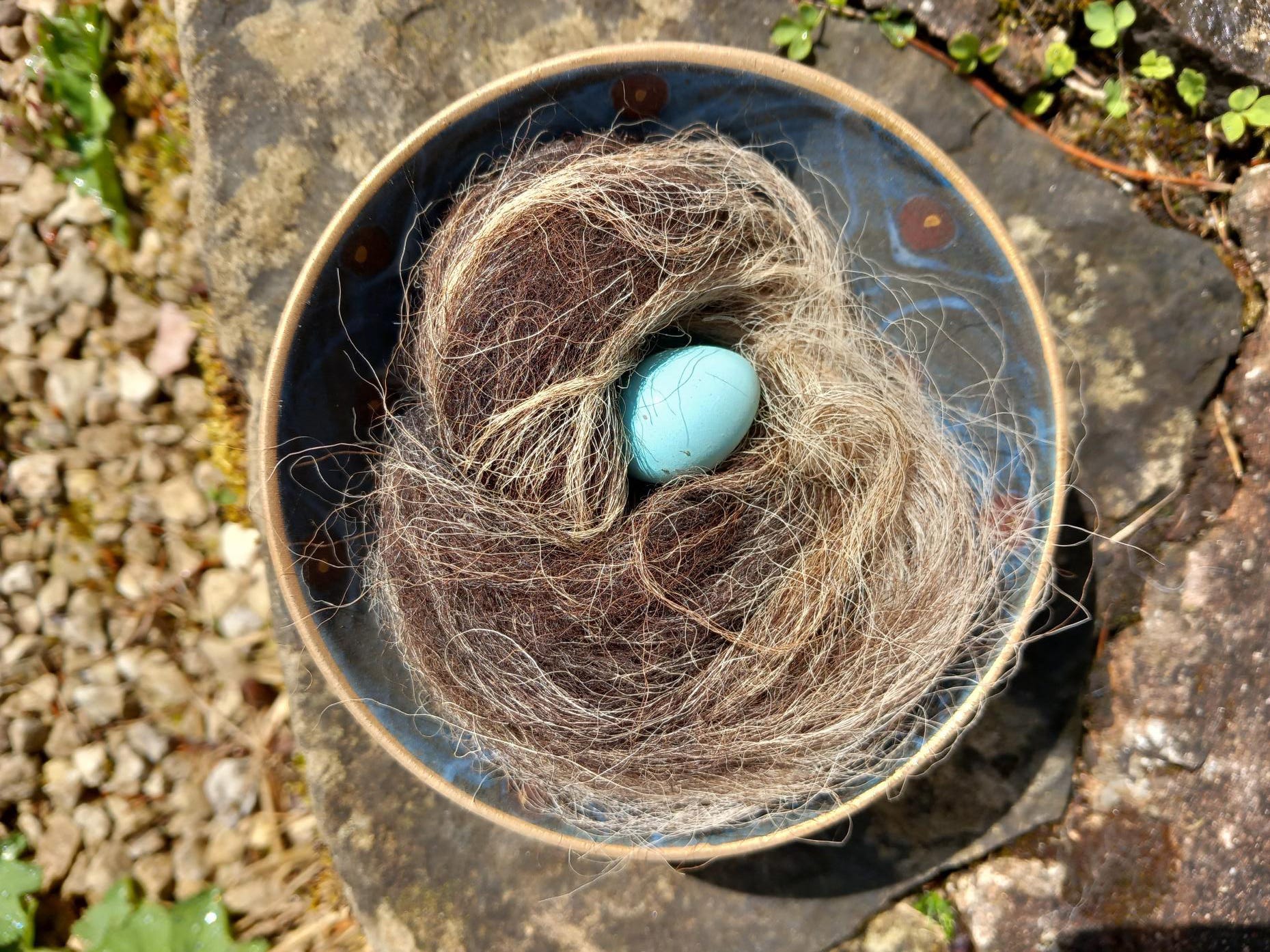
Long ago, I went to live in a part of Ireland where the Gaelic1 dialects still wake each morning and sing their unbroken linguistic ancestry, right back to the dreamtime. Where the twisted salt-sculpted hawthorn of Ulster’s Gaelic vernacular still clings to the western seaboard, bent over smooth by the gales of history. You can hear it unabashed in the family-run hardware shops and at the street corner. It hangs over the farm gate mid-morning as if a passing king and queen of the Ulster Cycle had cast aside their exquisitely jewelled cloaks in the rising heat and forgotten to return for them. Village by village, the ancient language of the Gaels ripples along the shore of Donegal from Na Dúnaibh, The Strongholds, westward past the clenched fist of Cnoc Fola, the Hill of Blood, and presses south to An Clochán Liath, The Grey Stepping Stones.2 Each village is a link in the chain and each link is unique. Hand-crafted. Some are rusted and perilously close to giving out. Others are bright and ring true. For now, at least, the line is holding.
So yes, chuaigh mé chuig an tobar,3 I went to the village well in search of the pure spring water of the beautiful old language. It was not initially forthcoming. Other incomers had trodden these paths before me. Some had meant well. Others had been looking to rummage through the old language’s personal belongings for trinkets and souvenirs, memes and sound bites. The language had grown suspicious. Tired of being prodded and poked. Weary of having the dimensions of its skull measured.
I lay low and waited. I prostrated myself out on the turf bogs to soak up some of the blackness of the land’s dark history. I hid all trace of my British-officer English voice under a cairn of weathered schist, far off the beaten track. I rolled in the rotting kelp on the strand line to disguise the foreign smell of me. And I listened, leaning into the strange vowels and the multiple interwoven rhythms of their every sentence. For months, my tongue silently mimicked the sounds it heard. And waited. They have a well-known wisdom saying in Ireland. Listen to the music of the river and you will catch a trout.
Finally, at the chiming checkout of the Gort an Choirce SPAR mini-supermarket and petrol station, I received the hand of blessing. ‘If you really want to hear the language, you should visit old Mr Gallagher. He has beautiful Irish,’ the lady said, almost in a whisper, as if she knew she was taking a risk in revealing such classified information to a stranger.
Beautiful Irish. Gaeilic ghalánta,4 as they would say in the area of north-west Donegal where I lived. Over the following years I heard this phrase used time and again to pay respect to the speech of fishermen, headmistresses, farmers, widows. It was not that these people with beautiful Irish were what we would call in English ‘well-spoken’, nor that they spoke with a rhetorical flourish or with an extensive, esoteric vocabulary. Far from it. It was that they spoke with a tonal subtlety which sang the songs of emotions and visions, both mythical and everyday, using only the simplest of linguistic ingredients. Frills and ruffles were frowned upon.
A language, any language, is an infinite sea of possibilities. I would be a fool if I tried to tell you that I have sailed across the ocean of Gaelic. I have been afloat these last fifteen years but I have only ventured out into the bay and peered longingly around the headlands and the shelter islands towards the horizon. I cannot tell you that Irish has no word for possession, for ‘having something’, as is sometimes asserted in the chatter of social media. Irish has many words and idioms to assert ownership. Of course it does. I cannot tell you that Irish has some single esoteric word which signifies an emotion or value which is inexpressible in any other language. The Celtic languages are not assemblages of memes for the taking. Words, like the organs of the body, only live within the whole. Take them out of their living context and they wither and die.
All I can tell you is that I am forever haunted, ravished, beguiled by the memory of those virtuoso speakers of beautiful Irish. In cosy warm winter cow byres, in tidy front rooms, on the quayside – the language which I had studied in textbooks and classes came to life and winked at me. I can only give you a few glimpses. For the rest, you will have to travel, unannounced and under cover, into the heartlands of Tír Chonaill.
Gaelic is endlessly flexible with regard to word order within a sentence.5 The fishermen fresh from the ocean played tricks with their syntax, like the conjurer who conceals a bead under one of three cups. They shuffled the words of a sentence and let you guess where the meaning really lay. And the meaning became a shrimp, a crab, a lobster.
Gaelic has a tiny sibilant word for ‘is, was, would be’ which sneaks through an utterance as an almost invisible hissing snake. I used to visit an old lady who could charm it, bid it bend the sense of surrounding words until they ate their own tails.
Gaelic is not inclined to coin new words for every trifling eventuality. It prefers to work with what is at hand. To improvise. You will find a newly minted word for ‘refrigerator’ in the modern dictionary. But if you listen closely you may still hear ‘frost box’. The finest speakers I met would rarely feel the need to use any but small handful of infinitely adaptable verbs, which they combined with prepositions and adverbs in endless permutations to achieve their meaning. Because of this, their speech became a sticky web of connotation, waiting for the fly of inspiration to tremble in its grip. So in this respect, and in many others, you could call their everyday speech a stream of poetry. But that might give the impression that it was lofty and rarified. Instead, let’s liken them to great bakers who take just a few, very everyday ingredients and transform them by some unfathomable alchemy into the finest loaf of bread.
I wanted to have the taste of that bread in my mouth, to learn the conjuring tricks of the language until I too might aspire to Gaeilic ghalánta – and never speak my mother tongue again. I wanted to reinvent myself and be free of my past. But for all the influencer’s talk of transforming and manifesting, the gods do not permit us to clean the slate. They protect us from the final folly of cutting off our own roots. People, like trees, are built from the bottom up.
***
And so, here I am. Writing to you now, not in Gaelic but in English. After many years on the road I went back to that pile of schist hidden in the Derryveagh mountains of Donegal and retrieved the package, tattered and mildewed, of my mother tongue. I came home.
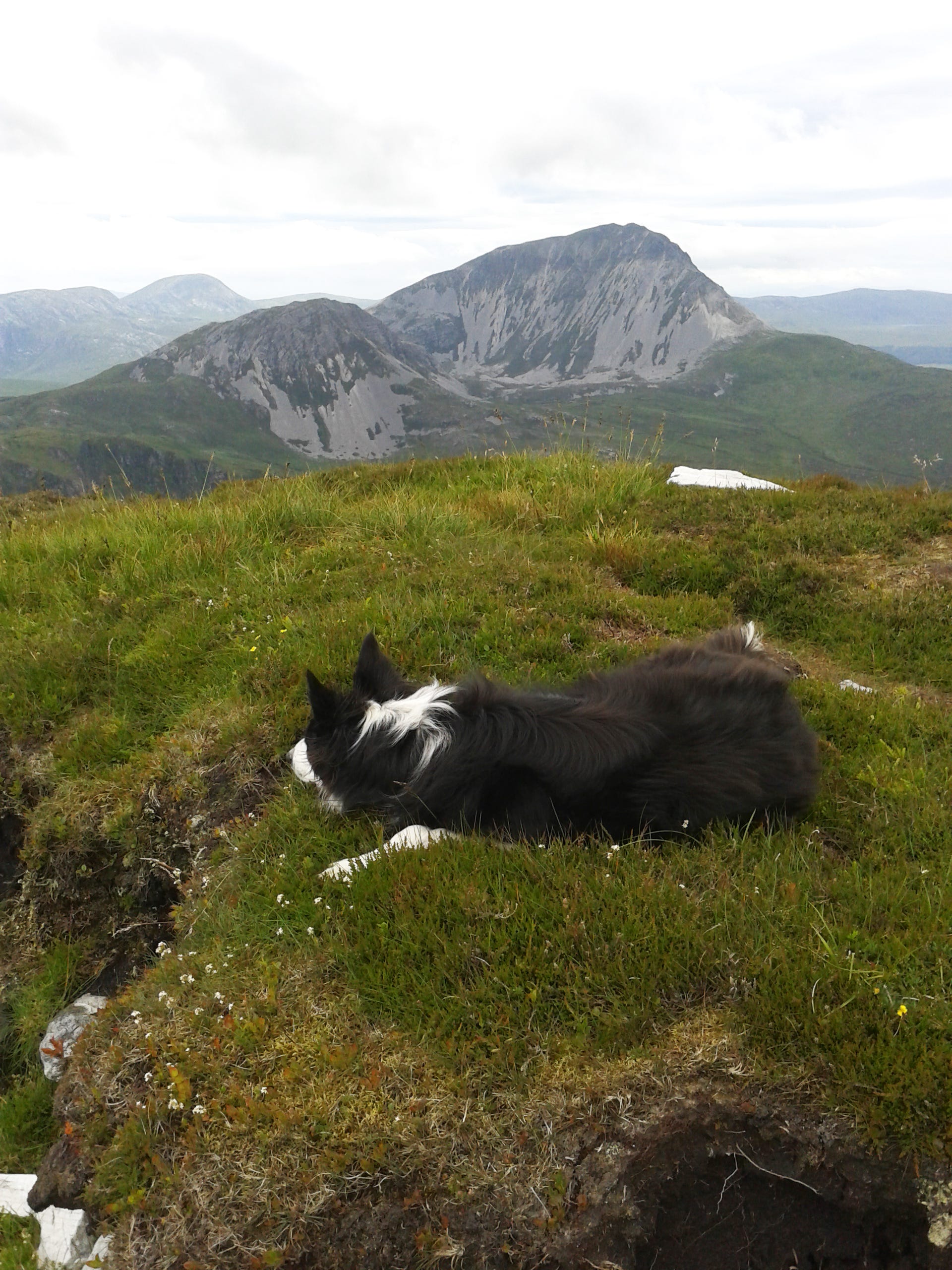
Washing up on the coast of Britain, more a piece of worthless flotsam than a king of Ithaca, I set off inland to look for the many forms of expression that I used to forage in the hedgerows as a child. They were not initially forthcoming. Many of the linguistic thickets had been grubbed up to facilitate the efficient monoculture of mass media. The woods, wary of language, would not converse. Red squirrels circled the girth of the great beech tree at the front of the house, slipping in and out of view, refusing to be snared by description. Polecats concealed themselves like snipers in the old oak wood and fired rounds of silence. I lay low and waited. I eavesdropped on the breeze.
On an old stone bridge over a clear river in a northern market town I stopped and pretended to look into the water. Two gentlemen, old acquaintances in worn warm jackets, leant over the parapet. ‘How are things?’ Both men understood the question. ‘There’s been a trickle of small olives6 coming off for the last hour or so.’ And sure enough, underneath the trailing branches of a willow tree below us, a lazy trout kissed the surface once, twice and after some minutes a third time. Each time there was a gentle dimple in the water’s blushing cheek as if the fish were kissing a sleeping child, not wishing to wake them but unable to resist the touch of warm skin.
At a stile on the path to Jinny Wood I came across the lady who lives very quietly in the old cottage up the hill. ‘How are things?’ I asked. She smiled. ‘Wonderful. A woodcock just got up, right at my feet.’
On a morning in late April, the farmer who has the hay meadows up back of the house was stood at the gate to one of his fields watching hares. A quiet man. Generally more for a wave of acknowledgement than for chit-chat about the weather. But that morning, unusually, words burst out of him. ‘I heard the cuckoo.’ He did not say that he had heard a cuckoo. At any one time and in any given place in this valley you can hear two or three birds making their announcement that the year may begin in earnest. In the farmer’s mind, or so I took his meaning, the spirit of cuckoo had once again descended into the valley. Individual birds, yes, but collectively a single theme, a unitary blessing.
I am beginning to understand that these simple turns of phrase, improvised from the simplest ingredients, are embodiments of a love so deep that we can only see its reflection in the hand-crafting of speech. I will keep eavesdropping on the breeze and my tongue will try to form the sounds of its voice.
I don’t suppose for a moment that anyone is hanging on my every word - but just to say thanks to readers who have stayed with me over the last few silent months. I was battling the beast of a PhD viva and ‘minor corrections’ and subsequent committee approvals - all of which quite put me off my stride. But now the PhD is approved and on the library record sits my ‘Socio-historical and linguistic aspects of Achill Irish’. And so now the words are tumbling out of me again. To many words, maybe! This piece is longer than usual but just didn’t seem to want to be divided up. I’ll do better next time.
I mostly use the term ‘Gaelic’ here to denote the family of Celtic languages spoken in Ireland, Scotland and on the Isle of Man. I pronounce this word in the way in which it is generally heard in Ireland. When speaking in English, most Irish people will refer to the variety of the language as it is spoken in Ireland as ‘Irish’.
These are only my direct English translations of the Irish placenames. There are other, official, English names for these places and there are other possible translations.
All of my spoken Irish derives from the specific dialect of north-west Donegal. It will sound very different from the Irish you have heard in other parts of the country or in the ‘standard’ language. That said, I am not a native speaker and depend of the fidelity of my memories of how native speakers said these words.
Gaeilic Ghalánta – in Donegal you will not generally hear a final vowel in the word Gaeilge. The spelling here is an acknowledged variant (see Foclóir Gaeilge-Béarla by Niall Ó Dónaill) and more closely represents the Donegal spoken form. The adjective galánta (gallant, fine, grand) is in restricted use throughout Ireland but in Donegal has come to be something of a shibboleth, used very commonly to express approval of just about anything.
Gaelic, you will be taught by the textbooks, is a VSO language. A sentence begins with the verb, then the subject, the actioner of the deed, and finally the object of the action. The reality is wildly more complex.
‘Olive’ is an informal fly-fisherman’s term for a number of different species in the mayfly family.
Nice to hear from you David, howya diddling? For some reason, now that I am 70, a lot of words I grew up with, Lancashire expressions my grandparents used, have come back to me. I stopped using them as I became an adult because people would look askance, and I thought I needed to fit in. But lately, when they have risen to my lips I let them out, just for old time's sake.
by the way, this thought. I still say "icebox" rather the refrigerator.