
The invisible man
A surrender to love

There was a quiet man who lived up in the hills of Donegal. He came by our tiny cottage in the valley bottom from time to time. A drystone waller of the rough kind. The walls and the man. Both he and his walls were thrown up in glorious haste and would be knocked back down again as soon as the passing of a few years and the seasons’ whims dictated. His Gaelic was a treacle of sticky richness, almost impossible to follow as it flowed like cooling lava around the rocky outcrops and back-country scree paths of his tiny kingdom in the Derryveagh Mountains.
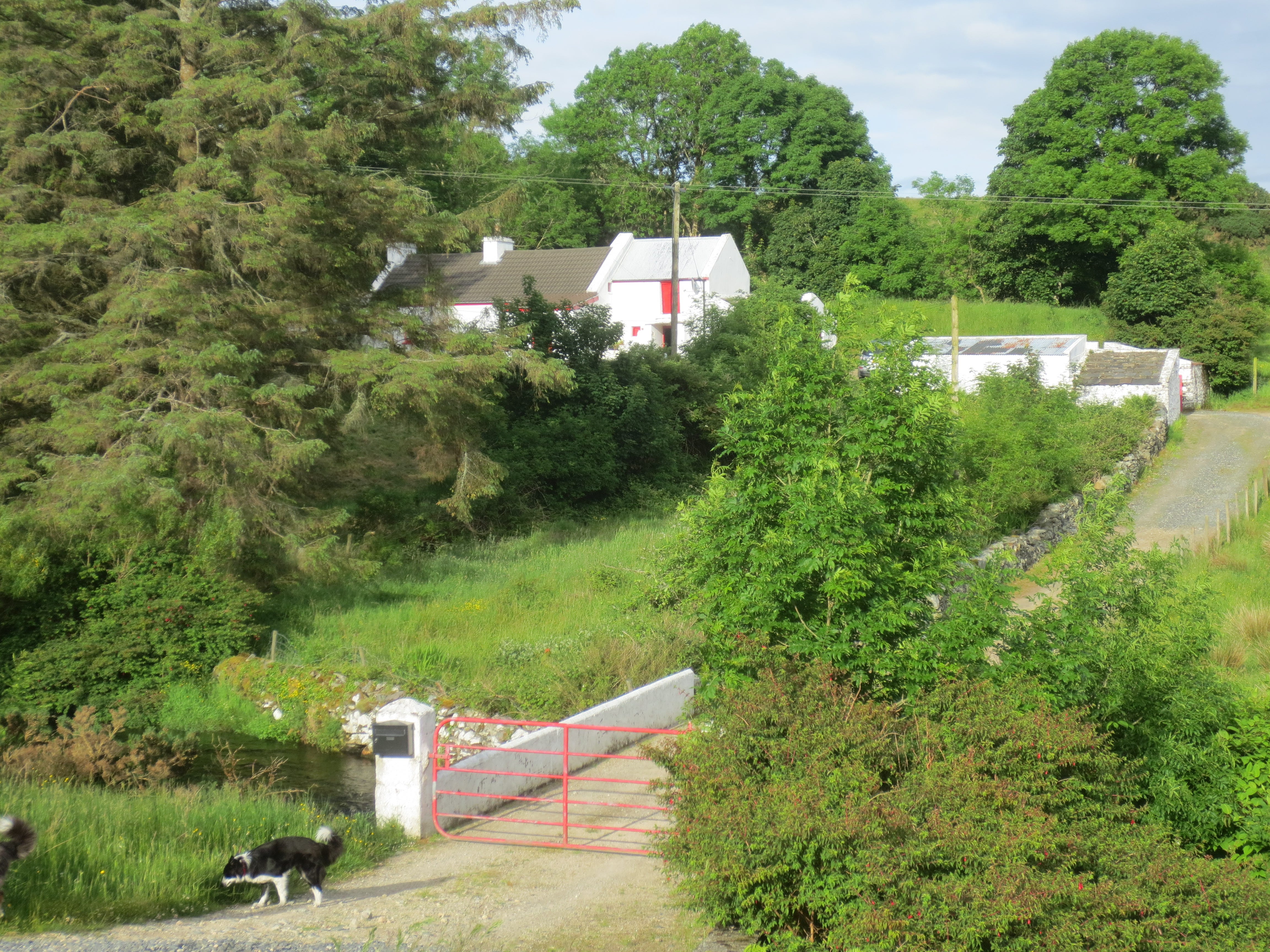
He was not for tarrying or blathering. But like all the world’s titans he had one weakness. With him, it was tea. Rich and sugary, it brought him snuffling towards me like a badger to honeyed peanuts. He would exchange a scant few words for bolgam tae, ‘a swallow of tea’. He thought he was driving a hard bargain. A hard bargain was the creed of his people. I saw no need to let him know that I was the clear winner in the deal.
The waller had seen them often, na daoine maithe,1 the good people.2 Ar imeall na súile, at the edge of his eye. That was how he described the tickling tension of the things he almost saw, far out to left and right. He had no need for a pristine new phrase to directly express our mechanistic ‘peripheral vision’. His idioms had been sharpened on the whetstone of long centuries. They hit the mark. Always in the bullseye but just far enough off centre to avoid the impression of perfection. Language, like a beautiful face, is marred by perfection.
He told me the trick of seeing the invisible. When the good people appear at the margins of the hazel wood, resist the reflex turning of the head which would place them centrally in your field of view. They will be gone before your eyes reach them. They hate to be seen. Continue to look ahead. Focus on the stone in your hand. Let them dance on the edge of your eye.
***
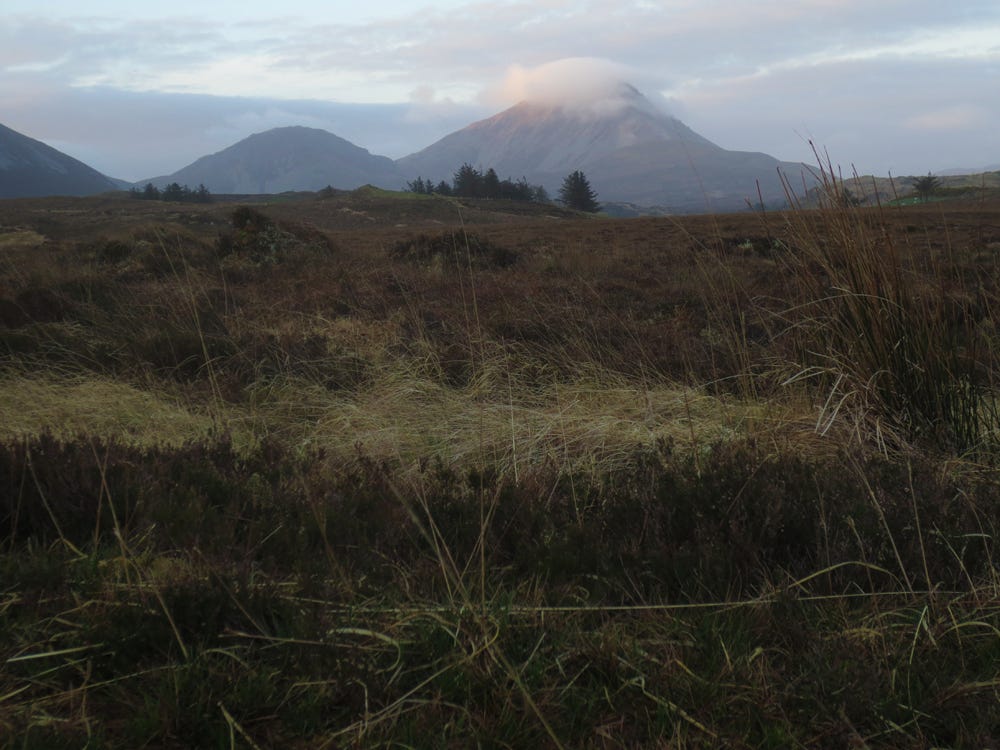
Dead ground.3 Give me the opportunity and I’ll always make my way across the fells through the dead ground. Open ground still makes me anxious. I feel naked and vulnerable. After all these years. So I’ll go miles out of my way to stay concealed by a slight depression in the land. Any cover will do. A barely sunken sheep-trod with a ruff of bracken to make up the ramparts of concealment. A shallow scar in the limestone where a forgotten stream lies buried. Every inch of the British countryside has eyes. And I cannot bear to be seen.
The attainment of invisibility. It is not as outlandish as you may think. I did my apprenticeship as a child. Out of necessity. You see, from the age of nine or ten, and up to the age where a girl’s deliberate smile and a pint of cider seduced me onto the rocks of Sirenuse, it was fish which filled the waters of my dreams. Grayling and trout, chub and dace, perch and shad. The mighty overlordship of salmon and the terror of the old pike who lived, ever hopeful, below the defunct Victorian slaughterhouses of Monmouth town. These gorgeous inhabitants of the otherworld, stranger than any fiction. They glimmered and beguiled at the edge of my eye. It was I who was hooked. The ceremonial syncopation of the casting of a fly rod was my obeisance before the altar.
But the finest fish were in the stretches of the local rivers - the Wye, the Monnow and the Troddi - where gentlemen paid handsomely for the privilege. So I became a poacher. The tricksy misty half-light of dawn was my ally. The long shadows of sundown were hated informants, betraying my scissor-stride to the ever watchful hillside. Overgrown hedgerows and labyrinthine bramble thickets were as joyful to me as to a fleeing rabbit.
I can still hear the war-drum of my heart pounding in my ears as the farmer stopped to light a cigarette not twenty yards from me. I can taste the bead of sweat running into my mouth when the bailiff paused nearby to sniff the air under an old riverside alder. Fee-fi-fo-fum.
Being invisible, the rivers taught me, is not a momentary state. It is the culmination of a deliberate flowing towards an ocean far away. Towards becoming nothing at all. It begins with stepping softly. In the etiquette of invisibility one does not look the robin in the eye as she returns to her nest. This would discomfort her and the ripples of her disquiet, with you as their conspicuous origin, would be seen by the whole valley. Cast your eyes down, then, into the mulch and the leaf litter where you belong. Notice how the villages of the wood lice and the towns of the shiny ants are out of sight.
I lie on the ground sometimes while creatures with endlessly variable numbers of legs crawl over me. A beetle’s six allegro beats and the spider’s adagio eight play tunes I can hear on my skin. The centipede’s rippling march across my face is a long-reach swell on the ocean. People pass by on the footpath a few yards away. I can smell their deodorant. They talk in hot breathy voices of many things I cannot understand. They swish and clatter so loudly that the wood lice stop what they are doing and poke their heads up into the light, antennae sifting the air for news. I suppose that I remain unseen because the walkers do not wish to see me. I am not wearing camouflage cream, nor am I covered in a sniper’s cloak. This is not an exercise in bushcraft. Only a daily surrender to love.
Just once there was a young girl, skipping along behind the grown-ups, who hesitated and began to turn her head before she remembered the rules of enchantment. I did not see her face, nor she mine. But perhaps for one unrepeatable moment in my whole wicked life I was one of the good people, dancing at the edge of her eye.
My pronunciation of these words reflects, to the best of my ability, the way I heard them in Donegal. The vowels in both words may sound strange to you if you are more familiar with dialects from elsewhere in Ireland.
In many cultures there are linguistic taboos which prevent the speaking of the names of deities and other-than-natural creatures. The generally unseen inhabitants of mounds and magical groves in Ireland are thus most often referred to as simply ‘the good people’.
I have long been familiar with, and much attracted to the idiom ‘dead ground’. I know people, however, for whom it is unknown and perplexing. It means, in its most literal sense, the parts of the landscape which are hidden from you at any particular vantage point. Perhaps you can see all of a distant hillside from where you stand but not the intervening ground where gullies and depressions hide the land from line of sight. These places are full of possibilities, good and bad. They are, until you venture into them, in ‘dead ground’.
a lovely enchanting tale / thank you for that / i have found magic (surprisingly) in my suburban lot in america / it never goes away it just hides where the careless eye can't see it https://rohn.substack.com/p/the-dweebil-at-the-center-of-the
Enchanting <3